
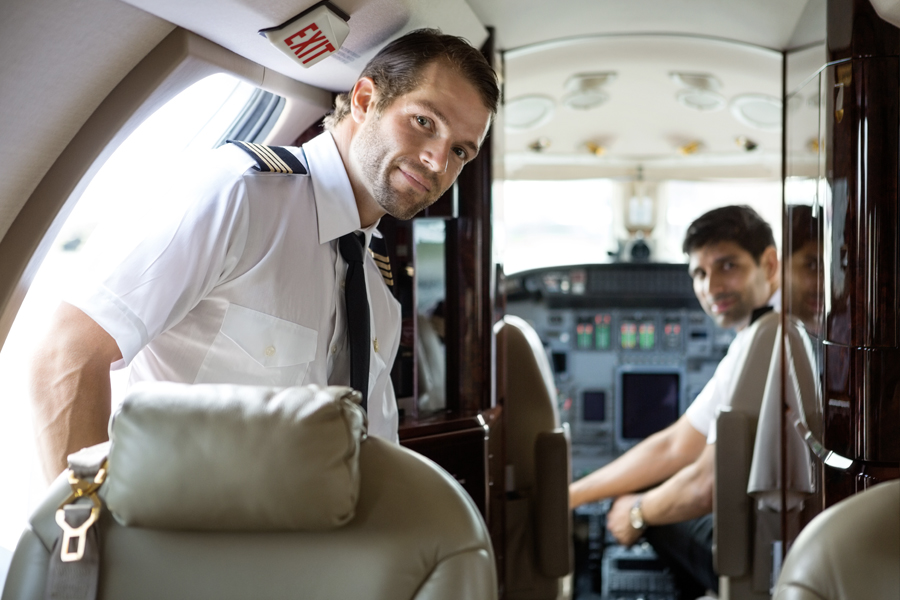
At Avionco, we are often asked what it takes to becoming a private jet pilot. There are many factors that make private pilots different from commercial aviators. Let’s take a look at some of those today.
It requires a rare combination of flight expertise, interpersonal finesse, and a willingness to work in a fast-paced, high-pressure environment. For those aspiring to fly aircraft like the Bombardier Global series, the path to the cockpit is paved with rigorous training and high expectations.
Unlike commercial aviation, where pilots follow structured routes and rigid schedules, private jet pilots operate in a world of customization and unpredictability. One day might involve flying clientele from London to Dubai, the next a last-minute repositioning to a remote island in the Caribbean. This demands not only adaptability, but a depth of experience across a wide range of conditions and airspaces.
Rigorous Training
Pilots typically begin their careers in flight schools or the military, logging thousands of hours in smaller aircraft before moving into the private sector. To operate large-cabin jets like the Bombardier Globals, pilots must hold an Airline Transport Pilot License (ATPL), complete type ratings for specific aircraft, and undergo recurrent simulator training multiple times per year.
But technical skills are just one part of the equation. Private jet operators increasingly seek candidates with strong soft skills: discretion, calm under pressure, and a service-oriented mindset. Pilots may need to adjust mid-flight catering to fit a client’s dietary needs or change a flight plan on the fly to accommodate a surprise board meeting.
High Demand
As the demand for private travel grows, driven by both business needs and lifestyle trends, skilled pilots are in short supply. This has created a competitive landscape where top-tier talent can command lucrative contracts, generous benefits, and the opportunity to fly state-of-the-art aircraft across the globe. To ensure our Clients have access to experienced pilots, Avionco, keeps an up-to-date database of qualified pilots for all private jet types.
Flying a Bombardier Global jet, for example, is no small feat; it involves high-performance aircraft operations, extended range navigation, and sometimes even polar routing. But for those who make it, the rewards are considerable. Global travel, close-knit crews, and a front-row seat to the world of ultra refined flight experiences.
For pilots who thrive on autonomy, professionalism, and elite service, the private jet industry offers one of aviation’s most rewarding and demanding careers.