
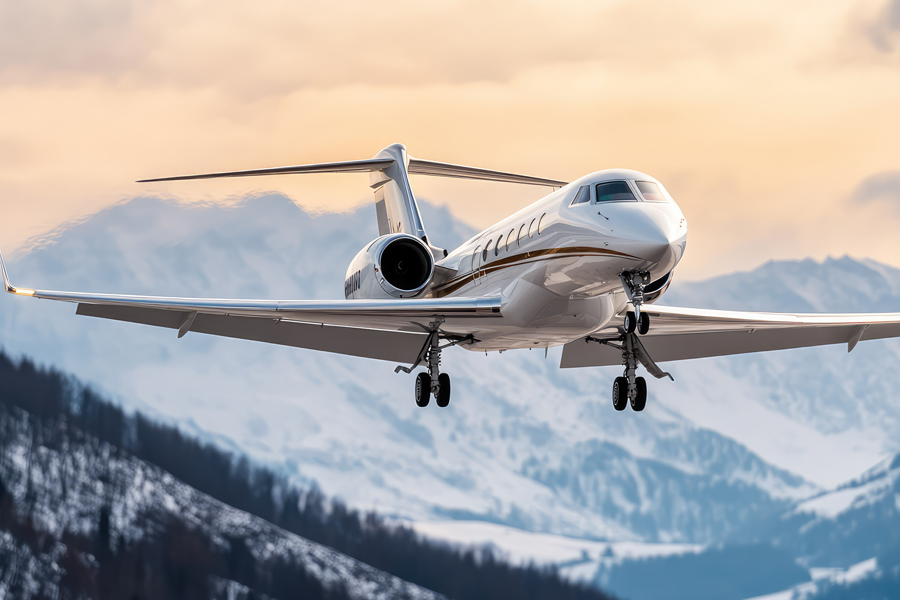
With ski season well underway, January and February bring snow, champagne, and altitude. While others are finishing off their holidays, many jetsetters are extending the excitement by heading for the glittering peaks of Europe’s Alpine resorts, where the air is crisp and luxury abounds.
From St. Moritz to Courchevel to Gstaad, the mountains have never been busier. And the runways that lead there are increasingly filled with the world’s most beautiful private aircraft.
Where the Action is.
For decades, the Alps have symbolized the ultimate winter escape. But in 2026, this timeless region is witnessing a resurgence among private jet travelers thanks to their focus on privacy, exclusivity, and wellness.
Alpine resorts work hard to attract the private jet community by offering adventure, comfort, and social prestige in equal measure.
For example, in St. Moritz, the Snow Polo World Cup attracts royals and celebrities to a visual spectacle where ponies thunder across the frozen lake and champagne flows faster than the snowfall. In Courchevel 1850, Michelin-starred dining and private chalets set the tone for France’s most glamorous winter village. And in Gstaad, understated wealth and Swiss discretion continue to define Europe’s most elegant mountain retreat.
The Private Jet Winter Circuit
The Alpine rush forms part of what some insiders call the “private jet winter circuit.” It begins in Aspen or Jackson Hole during in the early season, then transitions to the Swiss and French Alps later, before moving south to the Caribbean or Maldives once they’ve had their snow fix.
Operators and flight crews track this seasonal migration closely, adjusting fleet positioning to meet client demand. In 2025, the number of private jet movements into Alpine airports during January was estimated to have risen by over 20%, a trend expected to continue through the 2026 season.
Where the Air Meets the Ice
For private jet travelers, getting to their chosen destination is half the experience. The most popular airports – Samedan (LSZS) for St. Moritz, Chambéry (LFLB) or Grenoble (LFLS) for the French Alps, and Bern (LSZB) for Gstaad – handle a surge of business jet arrivals every ski season. With short runways, mountain winds, and snow-covered terrain each approach requires skill, testing even the most experienced pilots.
Many operators plan reposition flights to nearby airports for hangar storage, as limited space in resort areas commands a premium.
For the passengers, though, the journey is seamless. Disembarkation at private FBOs leads directly to chauffeured Range Rovers or helicopters waiting to whisk guests to their chalets or slopeside hotels, often within minutes.
“It’s the perfect mix of adrenaline and indulgence,” notes one European charter broker. “You can ski a black-diamond run in the morning and enjoy a five-course tasting menu that evening without ever touching a commercial terminal.”
Flight Operations and Challenges
Behind every flight you’ll find a team of professionals ensuring the journey runs flawlessly. Winter operations in the Alps demand specialized planning:
- Cold-weather engine performance monitoring
- De-icing logistics and hangar coordination
- Mountain-terrain approach training
- Slot management at high-demand airports
For pilots and flight managers, Alpine operations are among the most technically challenging in the world, and among the most rewarding.
Many business aviation companies now offer winter-mountain operations courses, equipping flight crews with the skills to handle the region’s unique meteorological and terrain challenges.