
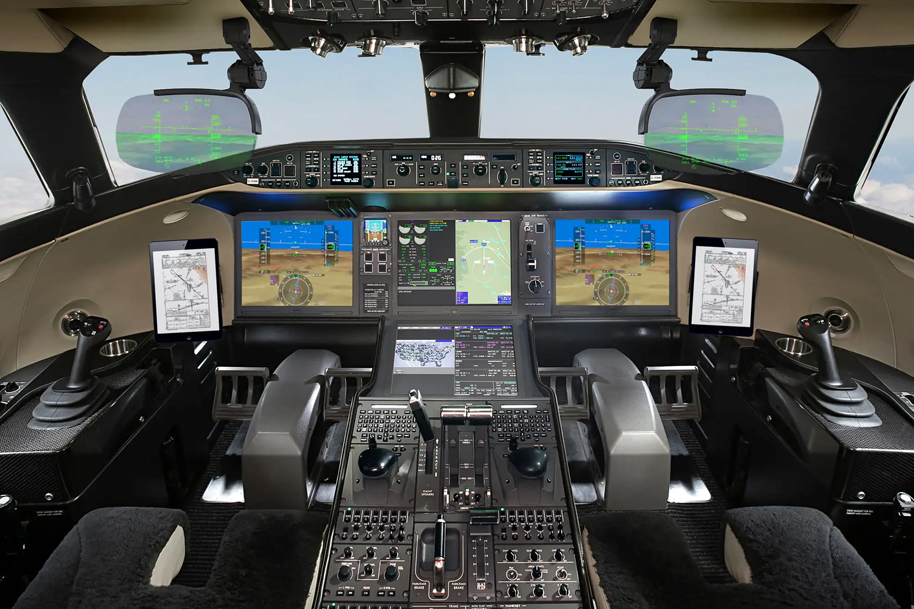
For most passengers, it’s enough to relax and enjoy the smooth flight and available amenities when they’re fortunate enough to experience a trip aboard one of today’s sophisticated private jets. One of the reasons they can expect to enjoy their flight is the presence of onboard technology that assists in safe, controlled operation. Avionics Suites, for example – integrated systems that provide navigation, safety, automation, and control.
Avionics are essentially the brains of an aircraft. Today’s private jets pack as much or more technology than many commercial airliners. These systems make flying safer, smoother, and increasingly automated while giving pilots unprecedented situational awareness. While passengers enjoy the quiet cabin and smooth ride of a private jet, the real magic is happening upfront in the cockpit.
In today’s blog, we’ll take a look at what powers some of these high-tech cockpits.
Industry Leaders
While dozens of avionics manufacturers exist, there are three that dominate the private jet market:
- Garmin G3000/G5000
- Collins Pro Line Fusion
- Honeywell Primus Epic
Depending on aircraft type, these systems are used to deliver a variety of benefits including: synthetic vision, integration between autopilot and flight planning, advanced weather and terrain visibility, and other flight management capabilities.
Key Avionics Features That Improve Safety and Performance
Synthetic Vision Systems (SVS)
SVS creates a 3D rendering of the terrain ahead – even in darkness or bad weather.
It reduces pilot workload and dramatically improves situational awareness.
Enhanced Vision Systems (EVS)
EVS uses infrared cameras to show:
- Runways
- Terrain
- Obstacles
This is especially valuable during low-visibility landings
Automatic Dependent Surveillance–Broadcast (ADS-B)
ADS-B provides real-time position reporting and traffic awareness, which is required in most controlled airspace today.
Autoland and Advanced Autopilots
Some modern private jets can land themselves in specific conditions, enhancing safety and accessibility should a pilot require that kind of assistance.
Integrated Flight Management Systems (FMS)
These systems calculate and report on a variety of factors:
- Optimal routing
- Fuel burn
- Altitude profiles
- Performance limits
The result: safer, smoother, more efficient flights.
How Avionics Contribute to Operational Efficiency
Modern avionics reduce pilot workload, fuel consumption, flight planning, and navigational errors. They also allow pilots to fly more precise approaches, access more airports, and handle challenging weather more confidently.
For private jet owners and operators, this translates into:
- Better on-time performance
- Enhanced safety margins
- Lower long-term operating costs
As private aviation continues to evolve, so does the technology that helps manage how jets are flown and what passengers can expect in terms of comfort and safety – and it’s only getting better and smarter!