
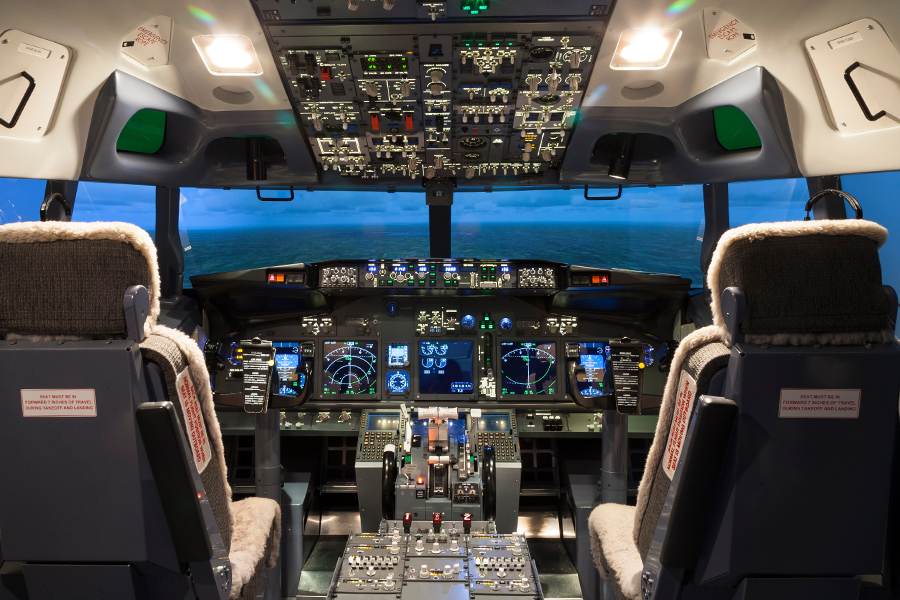
We know, some reading this are thinking “Is this even a thing when the world hasn’t even completely figured out, or embraced, the idea of the autonomous automobile yet?”. The fact is though, that the private aviation industry is no stranger to innovation, from the supersonic ambitions we wrote about in a previous blog, to AI powered concierge services and technology. Today, the prospect of autonomous private jets is taking things to an entirely new altitude. Could a $75 million business jet someday take off, cruise, and land without a human in the cockpit?
In this article, we’ll unpack the opportunities and challenges for such a future.
Autonomy Is Already Onboard
Many assume autonomous flight is a far-off fantasy, but semi-autonomous systems are already integrated into most modern business jets:
- Autothrottle and Autoland: Several jet types already feature systems that can land the aircraft with no pilot input.
- Auto-collision avoidance (TCAS), flight envelope protection, and digital copilots currently add multiple layers of automated safety.
- Single-pilot certification is increasingly common in light jets.
These advancements represent the groundwork for more advanced levels of autonomy, where artificial intelligence may take over not just routine tasks, but even decision making in complex scenarios.
How Private Aviation Defines Autonomy
Most aviation experts define autonomy in this progression:
Pilot Assistance
Already in place in certain aircraft types, it includes autopilot, auto-throttle, and decision-support systems.
Semi-Autonomy
Aircraft can perform entire flights but still require a pilot to monitor and intervene. Likely the next milestone for business jets.
Conditional Autonomy
No pilot is required under specific circumstances, such as clear weather, approved airspace, or short hops between known airports.
Full Autonomy
No cockpit, no pilot. Aircraft can adapt to any flight condition or emergency without human oversight. This would be the true “robo-jet”.
Manufacturers are initially targeting cargo or short-hop regional applications, but their tech is scalable.
Big Challenges That Need Solving
Despite progress, fully pilotless private aviation faces serious barriers:
Regulatory Complexity
- Authorities like the FAA and EASA move cautiously when lives are at stake (thank goodness).
- Certification standards for autonomous systems don’t yet exist.
- Autonomous decision making in emergencies (engine failure, bird strike, system loss) remains a legal and ethical minefield.
Client Psychology
- For most private jet clients, the pilot is part of the luxury experience representing a trusted, human presence.
- The idea of boarding a multimillion dollar jet with no one in the cockpit is still emotionally unimaginable to many.
Liability & Insurance
- Who’s responsible if something goes wrong? The software developer? The aircraft owner? The AI vendor?
- Insurers currently have no models for AI liability in crewless jets.
Security & Cyber Risks
- Autonomous systems are vulnerable to hacking or malicious interference.
- Cybersecurity must advance in lockstep with AI driven flight systems.
What The Developers Think Will Happen First
- Single-pilot operations assisted by AI copilots will become the norm in light jets and certain short-range business routes within the next 5 – 10 years.
- Fully autonomous flight for private jets may emerge in limited use cases such as air taxis or short hops between known private hubs.
- Pilotless long-range jets are unlikely to arrive before the 2040s – if ever.
Will We Ever Go Fully Pilotless?
The real question isn’t if jets can fly without pilots, it’s really whether passengers will ever accept it. Like all industries, businesses are at the mercy of consumer demand – so if they don’t want it, then there’ll be no opportunity. In an industry where trust, discretion, and control define value, the presence of a seasoned pilot may always remain indispensable, even if the jet itself no longer needs one. Let’s see if the progression of the autonomous automobile in society changes perceptions towards the skies.