
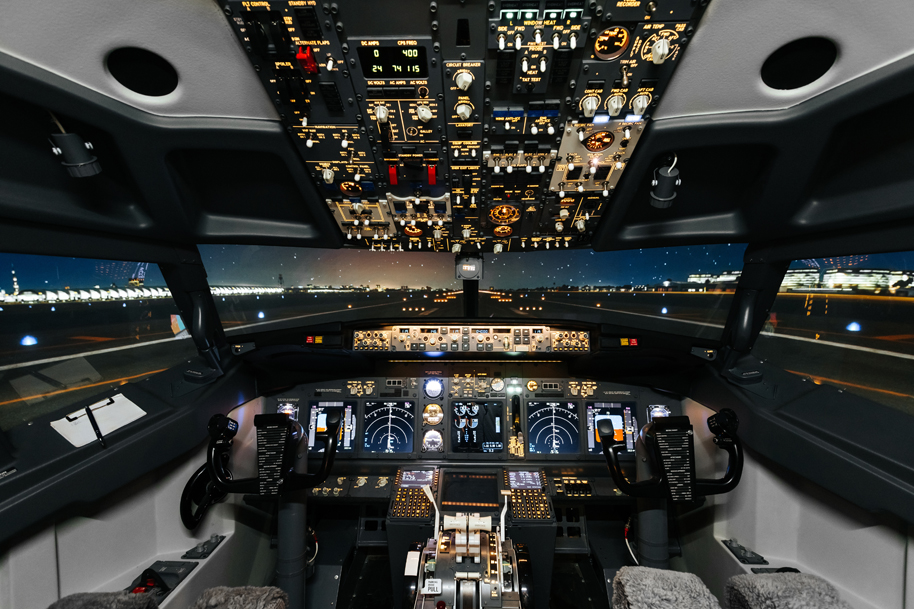
Even in this age of heightened technology, when most people (non- pilots that is) picture how a pilot controls an aircraft, they imagine a direct, physical connection – moving the yoke or sidestick, which then moves control surfaces like ailerons and elevators through cables and pulleys. Many are surprised when we tell them that’s no longer the case in modern private jets.
Instead, many aircraft now use what we call “fly-by-wire” systems, where pilot inputs are transmitted electronically rather than mechanically. It’s one of the most significant advancements in aviation technology, and one that dramatically improves both safety and performance.
The Move from Mechanical to Digital Control
As non-aviators, most people have generally understood that pilot inputs travel through a network of cables, rods, and hydraulic systems. While effective, these systems are actually quite heavy, complex, and limited in how they can respond to extreme conditions.
Fly-by-wire replaces those physical connections with:
- Sensors that detect pilot input
- Flight control computers that interpret those inputs
- Electronic signals that command actuators to move control surfaces
In simple terms, the pilot is no longer directly moving the aircraft’s control surfaces. Instead, they are sending digital commands to a computer which does it for them.
What the Computers Actually Do
The real power of fly-by-wire lies in what happens between input and action.
Flight control computers continuously analyze the aircrafts current situation. The computer is constantly calculating airspeed, attitude, weight and balance, and environmental conditions.
Based on that data, the system adjusts control surface movements to ensure optimal performance and safety. For example, when a pilot makes inputs to command the actions of the aircraft, the system can interpret and smooth or limit commands to prevent instability. It gives pilots an added level of adjustment that ensures optimal flight operation and comfort.
Envelope Protection: Built-In Safety Limits
One of the most important features of fly-by-wire is what we call “envelope protection”. Simply put, it keeps the aircraft operating within the limits of its design at all times.
Among other things this will prevent the aircraft from conducting maneuvers that might cause stalling at low speeds, “overspeeding” (travelling faster than its certified safe limit), or entering excessive bank or pitch angles.
Even in the very, very rare instance where a pilot could unintentionally command a dangerous maneuver, the system would override or limit the input to keep the aircraft within safe operating boundaries. Alerts would also sound, making the pilot aware. If there was ever a real reason why the pilot had to conduct a maneuver outside these limits, they would also have the knowledge and ability to override the system. Pilot skill is never replaced, just given an added level of safety.
Redundancy and Reliability
Because fly-by-wire relies on computers, redundancy is critical.
Modern systems are designed with:
- Multiple independent flight control computers
- Backup power sources
- Redundant sensors and data pathways
If one component fails, others immediately take over – often without the pilot even noticing.
The Outcomes for Everyone Involved
Fly-by-wire delivers benefits on many different levels. It results in smoother handling, (especially in turbulence), more stable climbs, descents and turns, and enhances safety through automated protections. It’s one of the things that make modern private jets feel more refined and controlled compared to older aircraft. While pilots remain firmly in command, these systems enhance precision and optimize performance in real time. Passengers may not think about how things work, while at the same time they appreciate the comfort of private flight.
About Avionco
Formed in 2000 by Mike Dodd and Josh Dodd, Avionco is a premier aircraft services provider, purpose-built to serve aircraft owners whose business and lifestyle needs require impeccable service and efficiency in everything they do.
Josh Dodd, COO, leads day to day operations with a team of dedicated senior management professionals delivering a complete suite of flight management services including Pilot and Crew selection, In-Flight and Ground Operations, Safety and Compliance, and Entry Into Service (EIS). Learn more at www.avionco.com