
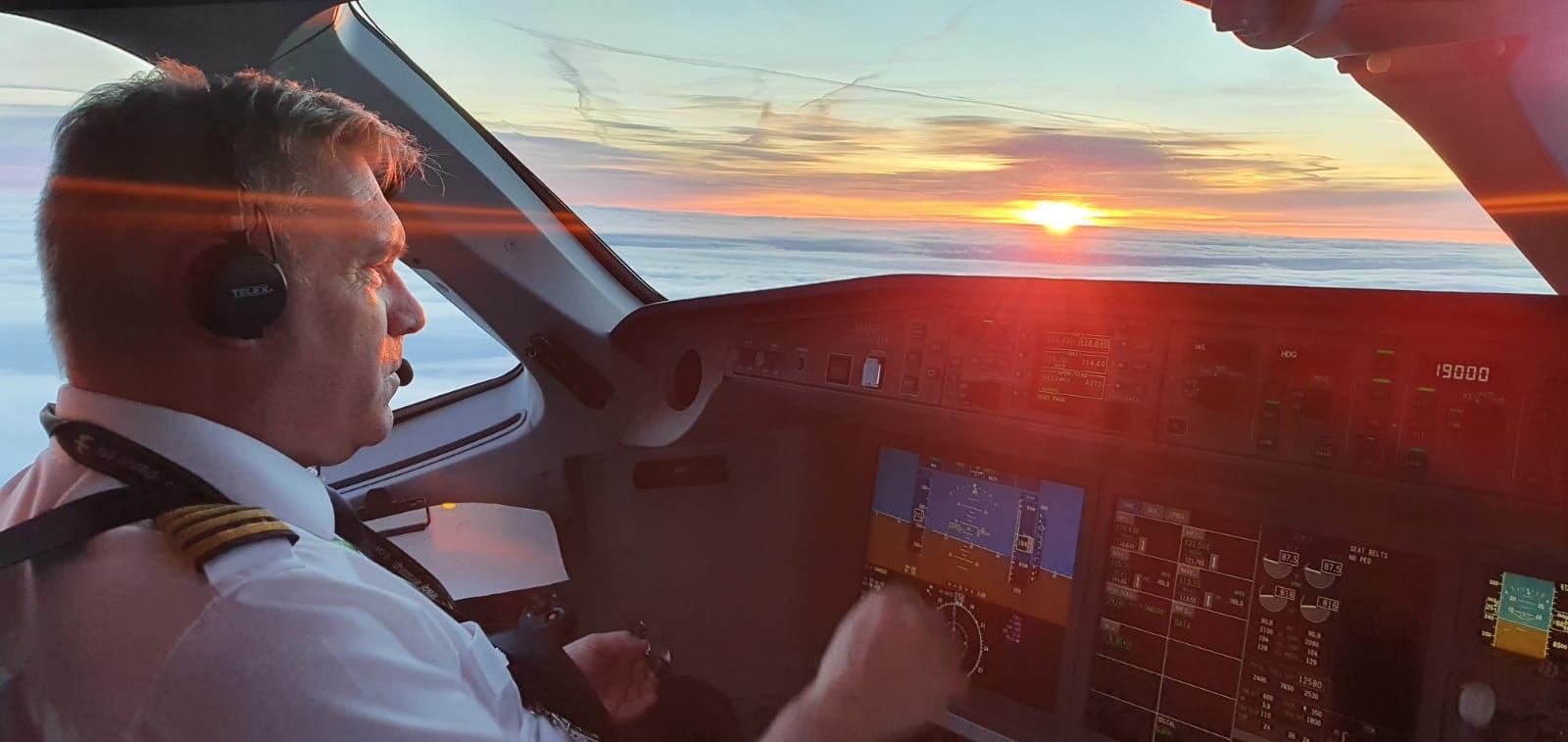
At Avionco, we are often asked how our pilots are trained and what our processes are for staying up to date. Today, we’ll give you a snapshot of just one training exercise of the many that all pilots must experience on an ongoing basis.
Chris Morton is not only our Manager of Compliance at Avionco, he’s also one of our skilled pilots who helps us serve our Clients around the world.
To keep up to date on his FAA Challenger 3500 license, Chris recently completed a week of intensive training at CAE in Montreal where he underwent an extensive series of exercises and tests.
The Training Experience
The recurrent 61.58 FAA training is completed over 5 days including two days of ground training, two days of SIM (simulator) training and a final check ride in the simulator.
This training covers a solid knowledge base on Aircraft systems, understanding standard operating procedures and theory as it relates to various technical issues that could arise during a flight.
While these kinds of issues rarely happen, the key is to make sure pilots remain alert to potentially dangerous situations and can respond swiftly and accurately should they be faced with any situation.
The training takes place in a remarkably life-like simulator experience that operates exactly as the aircraft would. Simulator technology has become so advanced and life-like that it is easy for a pilot to forget that they’re not actually flying the actual aircraft. This allows simulator training to elevate stress levels and push pilots to respond and correct in realistic conditions. In fact, Chris told us that during the week’s tests, he and his co-pilot found themselves experiencing rising temperatures in the cabin causing them to physically sweat through an exercise involving a valve failure that would indeed make the cabin warm on an actual flight.
The simulator allows pilots to train in dangerous situations without actually having to put an aircraft and crew in peril. The constant practice and repetitive activity help pilots develop effective strategies, automatic responses and teamwork skills to resolve any potential issues they may experience.
But Wait, There’s More!
For pilots who undergo this kind of training, the cycle never ends. As aircraft systems and technology advance, so must the pilot’s knowledge and capabilities. In fact, after completing the training above, Chris was then scheduled to complete focused “Fire Fighting and Water Rescue” training programs just a few weeks later.
While we appreciate the dedication to knowledge and excellence among our pilots, we think our Clients appreciate it most!