
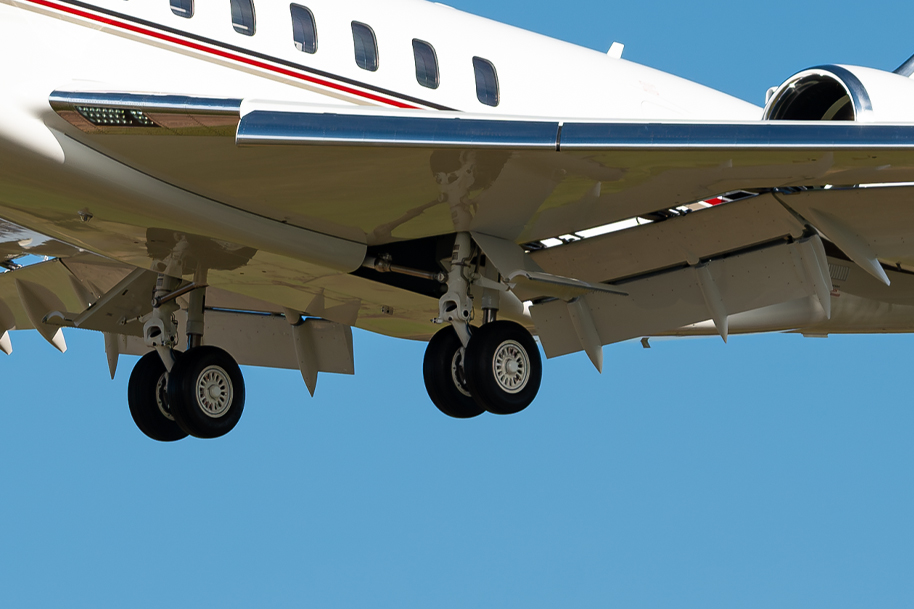
When people think of private jets, their attention usually goes to the luxurious cabins and aerodynamic designs, but there are many components of a private jet that are far less glamorous, yet absolutely vital to keeping every jet safe from the time it takes off to the time it lands. Today let’s consider something that casual viewers almost never even consider – the tires.
The tires on a private jet are among the most stressed pieces of equipment on the entire aircraft. They endure extreme forces, absorb massive loads, and must perform flawlessly on every mission. Private jet tires aren’t just scaled down versions of larger commercial aircraft tires, they are purpose-designed for the aircraft type. Here are some of the things that engineers and designers consider:
Extreme Pressure and Speed
A typical private jet tire is inflated to upwards of 200 psi (for comparison, your car tires are set at around 32 psi) and they must be able to withstand touchdown speeds of 120 – 150 knots (138 – 173 mph).
During landing, a tire instantly accelerates from zero to full rotational speed within a fraction of a second. The heat and stress generated are enormous.
Multi-Ply Construction
Most private jet tires use a bias-ply construction made from dozens of layers of nylon and rubber. This gives them strength, heat resistance and the ability to flex under high loads. Some newer designs are moving radial tires, but bias-ply remains common due to durability and cost.
“Multiple Cycles” – Frequency of landings and takeoffs.
Unlike commercial aircraft that fly long distances with fewer landings per day, private jets often perform multiple short hops on any given day resulting in frequent takeoff and landing cycles. Additionally, many destinations include smaller airports with shorter runways adding more wear and tear.
Ultimately, manufacturers and operators select tires that are optimized for safety and cycle life. Here are some factors that determine how they make those selections:
Aircraft Weight and Landing Loads
A light jet has vastly different requirements from a long range aircraft. Tire load ratings must match the aircraft’s maximum landing weight and energy absorption needs.
Runway Surfaces
Private jets often fly into a variety of destinations with varying runway designs. Private jets need to be able to safely operate with short runways, hot climates and sometimes rougher surfaces at regional airports. Tire tread patterns and compounds must suit these environments.
Cost vs. Cycle Life
Some tires last significantly longer but cost more up front. High-utilization charter operators often choose premium tires to minimize downtime.
Lastly let’s consider how maintenance plays a role in tire private jet tire safety. A tire failure on takeoff or landing can have serious consequences. That’s why operator maintenance teams focus on frequent pressure checks, regular inspections for any cuts, bulges or flat spots. Tires are regularly replaced based on predetermined measurable wear thresholds. In fact, private jet operators often replace tires earlier than required to reduce risk and maintain maximum reliability.
It’s likely you didn’t expect you’d be reading about private jet tires today, but for companies like Avionco … well, we think about stuff like this all the time!