
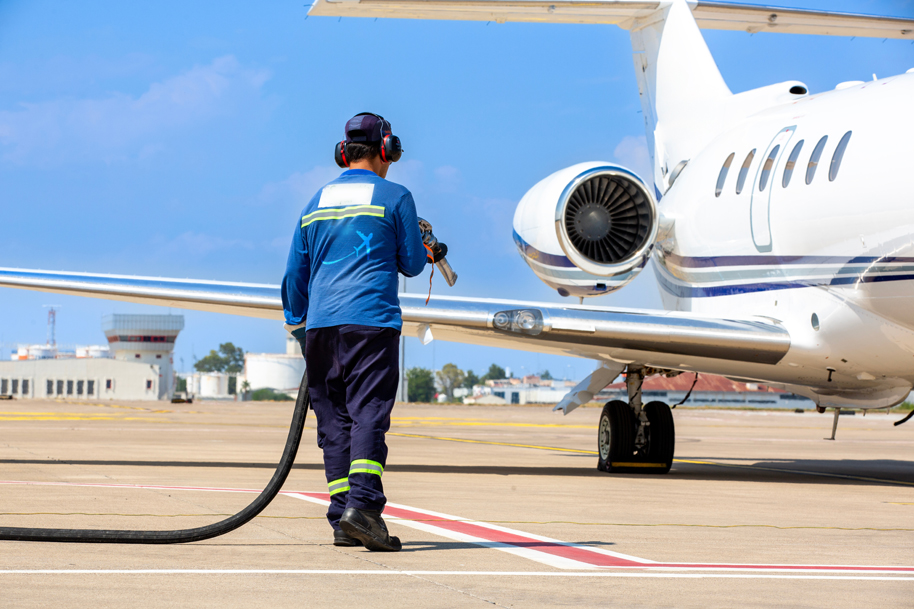
When it comes to jet fuel, it would be an understatement to say that 2026 has been a complicated year for aviation. As a result, private jet owners have needed to understand those complexities and navigate the most efficient ways to operate.
To do that, savvy owners have had to become knowledgeable about how, where and when they access fuel for optimum efficiency, speed and range. In today’s blog we’ll highlight how jet fuel is managed in sync with aircraft operation.
Understanding Fuel Storage and Transfer
Modern business jets don’t rely on a single fuel tank. Instead, fuel is distributed across multiple tanks, primarily within the wings, and in some cases, additional tanks in the fuselage or tail section. This is important for a couple of reasons:
- Weight distribution: Fuel isn’t just energy, it’s also mass. As it burns, the aircraft’s center of gravity shifts. Carefully transferring fuel between tanks ensures the aircraft remains balanced throughout the flight.
- Structural efficiency: Wings are ideal for fuel storage because they provide natural volume and reduce stress on the fuselage.
Fuel is typically stored in integral wing tanks (built into the wing structure itself).
Transfer pumps move fuel between tanks automatically or under pilot/system control.
Advanced fuel management systems continuously monitor fuel levels, temperature, and balance, making real-time adjustments as necessary.
In long-range aircraft, fuel transfer can mean the difference between optimal cruise performance and unnecessary drag or fuel burn.
How an Aircraft Keeps Fuel from “Sloshing”
As you would expect, fuel inside a tank doesn’t sit still. As the aircraft moves or encounters turbulence, fuel wants to move in response to the motion. For lack of a more technical term, we call this “sloshing” and it can destabilize an aircraft if not controlled.
Design engineers, figured this out and have developed three key measures to counter this:
- Baffles: Creating internal walls within the tank that limit fluid movement
- Compartmentalization: Dividing tanks into smaller sections
- Optimized tank geometry: Employing shapes designed to minimize free movement
The result is a more stable aircraft and more predictable fuel behavior, especially during dynamic phases of flight like takeoff and landing.
Fuel Temperature Control
At cruising altitudes often above 40,000 feet, temperatures can drop below -50°C. At these extremes, jet fuel can begin to thicken or even form wax crystals, which can clog filters and restrict flow.
To prevent this, business jets employ fuel heating systems, typically integrated with the engine:
- Fuel-oil heat exchangers use engine oil heat to warm the fuel
- Recirculation systems keep fuel moving to prevent cold spots
These systems ensure consistent fuel flow and protect engine performance, particularly on long-haul flights where exposure to cold temperatures is prolonged.
Today’s Era of Fuel Efficiency
Fuel systems don’t operate in isolation. They’re just part of a broader push toward overall aircraft efficiency. Innovations in business jet design are redefining the possibilities of fuel efficiency by incorporating blended winglets, advanced engine cores and lightweight materials.
Blended Winglets
These are upward curving extensions at the tips of wings that reduce drag caused by wingtip vortices. The impact is significant:
- Improved fuel efficiency (often 4–7%)
- Increased range
- Better climb performance
Advanced Engine Cores
Modern engines are designed with:
- Higher bypass ratios improving airflow around the aircraft
- Improved thermal efficiency (optimum temperature to convert fuel to thrust)
- Advanced materials that withstand higher temperatures
Lightweight Materials
The use of composites and advanced alloys reduce overall aircraft weight:
- Less weight = less fuel required
- Increases payload flexibility
- Lowers overall operating costs
The Future of Jet Fuel
One of the most important developments in aviation today is the rise of Sustainable Aviation Fuel (SAF). Today’s alternative fuels are reducing carbon emissions by up to 80% and work within existing fuel systems meaning no major modifications are required. These new fuels can also be used in combination with conventional jet fuels because most modern business jets are already certified to operate with SAF blends.
As efficiency technologies and sustainable fuels continue to evolve, fuel systems will become even more intelligent, more integrated, and more critical to the overall value proposition of business aviation. For owners and operators, understanding these systems isn’t just technical curiosity, it improves planning, access and performance.
About Avionco
Formed in 2000 by Mike Dodd and Josh Dodd, Avionco is a premier aircraft services provider, purpose-built to serve aircraft owners whose business and lifestyle needs require impeccable service and efficiency in everything they do.
Josh Dodd, COO, leads day to day operations with a team of dedicated senior management professionals delivering a complete suite of flight management services including Pilot and Crew selection, In-Flight and Ground Operations, Safety and Compliance, and Entry Into Service (EIS). Learn more at www.avionco.com