
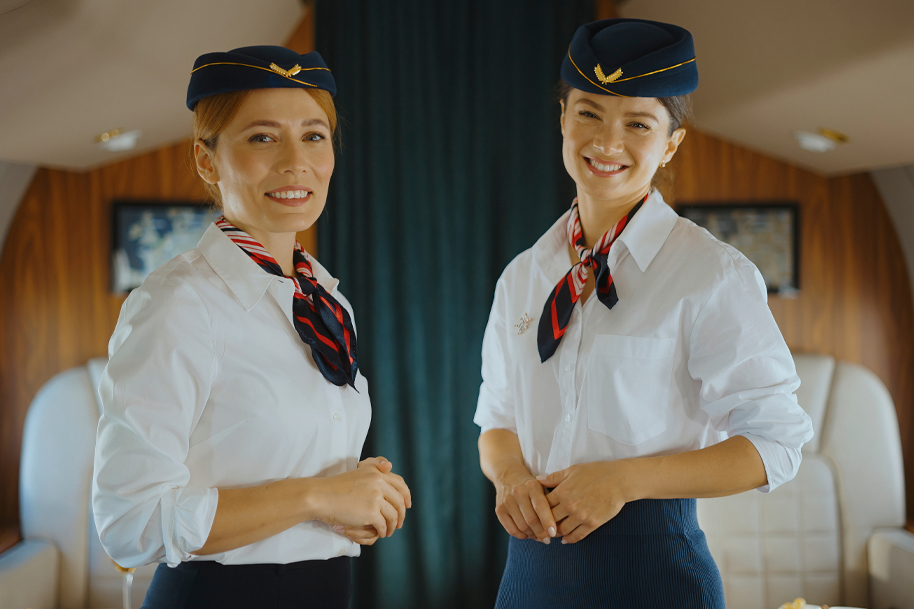
For decades, becoming a flight attendant on a private jet followed a fairly predictable career path. Most cabin crew had already spent years working in the premium cabins of major airlines, serving high-end passengers in the first class and business class sections, while developing extensive aviation safety experience.
Recently, Mike Dodd and Josh Dodd, of Calgary based Avionco explained how today’s crew hiring profile has changed. Here’s are our key takeaways:
Perhaps surprisingly to some, today’s private jet operators, charter companies, and aircraft owners are actually recruiting people from outside aviation altogether. Luxury hotels, Michelin-starred restaurants, superyachts, and even high-end concierge services have become fertile recruiting grounds for the kind of cabin attendant skills they are looking for. The reason relates directly to the expectations of private jet travelers who are seeking far more than just safe transportation. While safety is a given, today’s passengers expect an experience. One that rivals the world’s finest hotels.
Upon hearing this, our first thought was whether safety standards were keeping pace as these service standards continue to rise. Let’s consider how we got to where we are:
The Traditional Path to the Cabin
Historically, most private jet cabin attendants began their careers with commercial airlines. Working in first or business class provided valuable experience serving discerning travelers while developing a deep understanding of aviation procedures.
These professionals became experts in:
- Emergency evacuations
- Firefighting procedures
- Medical emergencies
- Cabin decompression
- Dangerous goods regulations
- Aircraft-specific safety equipment
- Crew Resource Management
Service was certainly important, but safety always came first as commercial airline crews repeatedly train for emergencies that most passengers hope never occur.
Every flight is treated as though an emergency could happen and that mindset has long been carried into business aviation.
Why Luxury Hospitality Has Entered the Equation
Wealth and status have had significant impact on the expectations of private aviation clients. We’re serving passengers who own multiple homes, travel by superyacht, stay in ultra-luxury resorts, and dine at the world’s finest restaurants. Their expectations don’t disappear when they board an aircraft – especially a private flight for which they are paying significant sums of money, whether they own or are flying charter.
Common expectations include::
- Restaurant-quality meals
- Personalized wine selections
- Luxury table settings
- Concierge-style service
- Complete privacy
- Anticipation of their needs before they’re even expressed
These are precisely the kinds of skills developed in non-aviation related luxury hospitality. Someone who has spent years serving guests at a five-star hotel or aboard a superyacht may possess exceptional attention to detail, polished interpersonal skills, and an instinct for delivering personalized service. For many private jet travelers, these qualities have become just as valuable as previous airline experience.
Superyacht, Super Service
One of the strongest recruitment pipelines today comes from luxury yachting.
Superyacht crew members are accustomed to serving exclusive passenger types who expect impeccable service around the clock.
Their experience often includes:
- Fine dining presentation
- Premium wine knowledge
- Floral arrangements
- Luxury housekeeping
- Event planning
- International etiquette
- Managing demanding clients with discretion
Many of these skills transfer surprisingly well to business aviation as does their safety training.
The Beyond Safety Skills Employers Are Looking For
Modern cabin attendants wear many hats. Depending on the flight, they may be expected to act as:
- Chef
- Butler
- Concierge
- Event coordinator
- Childcare assistant
- Executive assistant
- Security-conscious host
The best crew members possess remarkable adaptability.
One flight may involve serving a CEO working quietly during a two hour business trip.
The next could involve preparing an elegant multi-course dinner for a family flying across the Atlantic.
Every passenger has different expectations making flexibility one of the industry’s most valuable skills.
Who Can Keep a Secret?
Private aviation revolves around confidentiality making discretion a critical skill. Most people will say they can keep a secret, but it’s actually a rare commodity. Many people can’t help themselves when they have insider information to a story that might impress their friends or colleagues. They want to show how they are in the “know” and that’s what can cause information to “leak”. This is the exact opposite of what private aviation requires from crew, and it is non-negotiable.
With clientele that may include corporate executives, celebrities or government officials, cabin attendants may overhear sensitive business negotiations or witness highly personal moments. Professional discretion is a must.
As a result, many operators now consider emotional intelligence, professionalism, and the ability to maintain complete confidentiality just as important as technical skills.
What About Safety, Though?
Do these high level hospitality skills replace safety skills in today’s private aviation context? “Not at all” say the leaders of Avionco, a leading flight management company.
While hospitality professionals often bring extraordinary customer service skills they don’t necessarily have years of aviation safety training… so it has to be added.
Employers of private flight crew invest heavily in aviation specific safety education for their teams. Once hired, extensive training is conducted to make every employee, regardless of previous background, skilled in any emergency.
This includes:
- Conducting emergency evacuations
- Operating emergency exits
- Fighting onboard fires
- Administering first aid
- Using emergency oxygen equipment
- Managing passengers during decompression
- Coordinating with the flight crew
These are highly specialized skills that require focused training and regular recurrent practice for as long as they serve.
Service and Safety Are Not Opposing Goals
The overarching philosophy in private aviation is that passengers should never have to choose between unparalleled safety and hospitality. Today’s crew members are defined by:
- Five-star hospitality
- Professional discretion
- Calm problem-solving
- Extensive aviation safety knowledge
- Continuous recurrent training
- Confidence during both routine operations and emergencies
The finest cabin attendants make extraordinary service appear effortless while quietly maintaining constant readiness for emergency situations that could occur. So, passengers may enjoy their carefully catered dining experience with a healthy side of safety.
About Avionco
Formed in 2000 by Mike Dodd and Josh Dodd in Calgary, Avionco is a premier aircraft services provider, purpose-built to serve aircraft owners whose business and lifestyle needs require impeccable service and efficiency in everything they do.
Josh Dodd, COO, leads day to day operations with a team of dedicated senior management professionals delivering a complete suite of flight management services including Pilot and Crew selection, In-Flight and Ground Operations, Safety and Compliance, and Entry Into Service (EIS). Learn more at www.avionco.com